
Avoidance Is Not Procrastination: It Is Self-Protection
Apr 01, 2026
You’ve been putting it off again. Not because you’re lazy, but because something about the task feels… unsafe. Your chest tightens, your mind races, and before you know it, you’ve avoided it altogether. What looks like procrastination isn’t about motivation—it’s your brain trying to protect you. Understanding this distinction is the first step toward moving forward without shame. Learn more about why you do not trust your emotions by clicking here.
Table of Contents
- Introduction
- Procrastination vs. Avoidance
- The Psychology Behind Avoidance
- Signs You’re Experiencing Avoidance (Not Procrastination)
- Why Labeling It Procrastination Can Be Harmful
- Reframing Avoidance as Self-Protection
- How to Work With Avoidance (Not Against It)
- When Avoidance Becomes a Pattern
- Conclusion
- More Resources
Introduction
It’s easy to call it procrastination.
A task gets delayed. An email goes unanswered. A responsibility sits untouched on your to-do list.
But take a closer look at the internal experience.
There’s tension. Hesitation. A subtle sense of threat. Maybe even a wave of anxiety that makes it hard to focus, let alone follow through.
This isn’t indifference.
This is avoidance—and it’s often a form of self-protection.
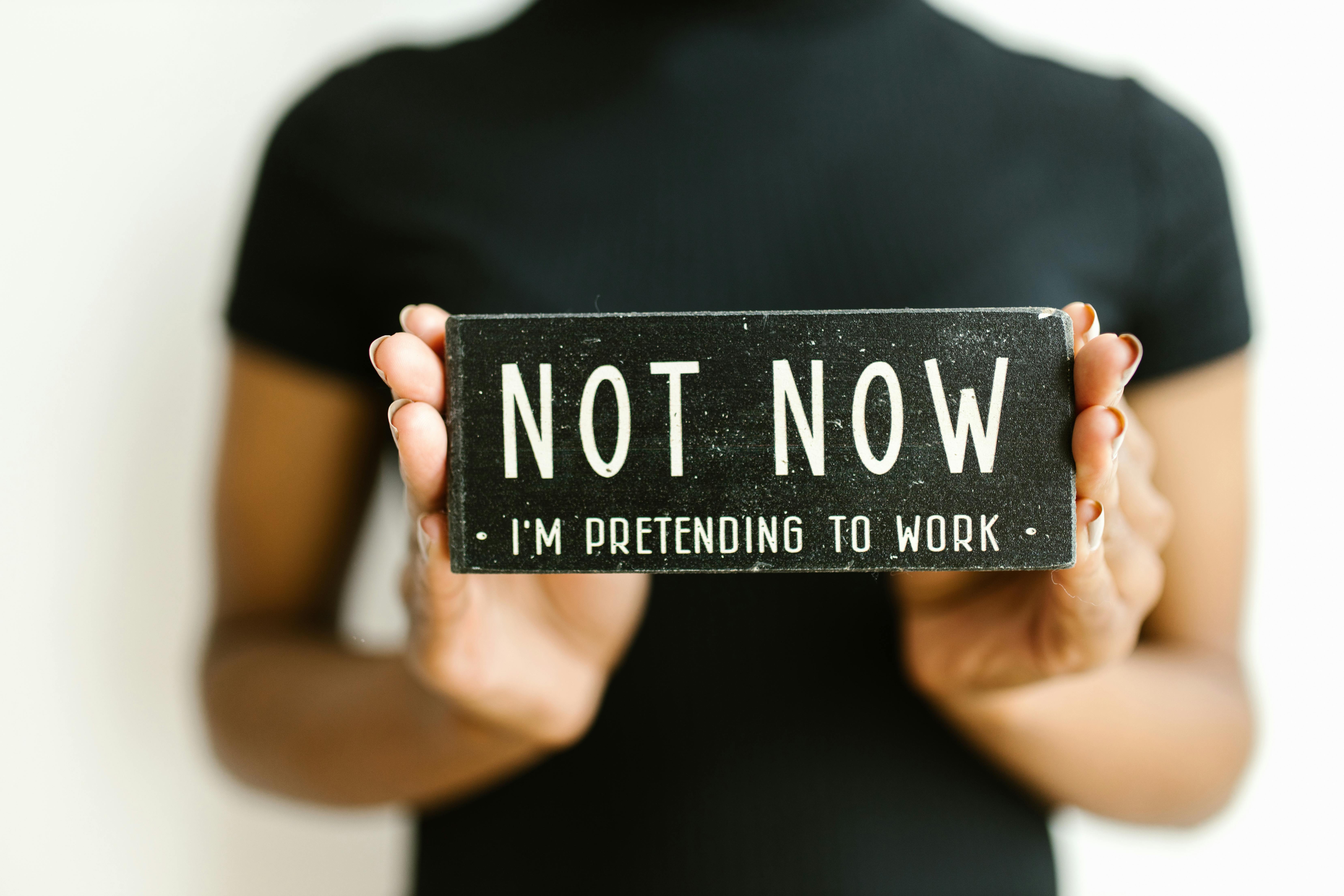
Procrastination vs. Avoidance
At a glance, procrastination and avoidance can look exactly the same. Tasks get delayed. Emails go unanswered. Deadlines creep closer.
But internally, they’re very different experiences.
Procrastination is typically about delay despite knowing the task is beneficial. It’s often tied to habits, motivation, time management, or even simple preference. You might think, “I should do this… I just don’t feel like it right now.” There’s resistance—but it’s relatively neutral.
Avoidance, on the other hand, is a response to perceived threat.
Not necessarily a physical threat—but an emotional, relational, or psychological one. The task doesn’t just feel inconvenient—it feels uncomfortable, overwhelming, or even unsafe on some level. You might notice anxiety, dread, tension, or a strong urge to escape.
This is your nervous system stepping in.
Avoidance isn’t about being lazy or undisciplined. It’s protective, not defective. Your brain is trying to shield you from something it believes could be harmful—like failure, rejection, conflict, or shame.
And importantly, this response often happens outside of conscious choice.
You’re not sitting there logically deciding to avoid the task. Your body is reacting before your mind has a chance to catch up.
That’s why telling yourself to “just do it” so often backfires. Because when something feels like a threat, your system isn’t focused on productivity—it’s focused on protection.
The Psychology Behind Avoidance
Avoidance isn’t random—and it’s not a character flaw. It’s rooted in how your brain and body are wired to keep you safe.
When something feels threatening, your nervous system automatically shifts into a survival response. Most people are familiar with fight or flight, but there are actually four common responses:
- Fight – pushing back, becoming irritable or defensive
- Flight – escaping or distracting yourself
- Freeze – shutting down, feeling stuck or unable to act
- Fawn – people-pleasing or over-accommodating to reduce tension
Avoidance often shows up as flight (putting things off, staying busy with other tasks) or freeze (feeling paralyzed, unable to start).
Emotional Threat vs. Physical Threat
Here’s the important part: your brain doesn’t clearly distinguish between physical danger and emotional risk.
An uncomfortable email, a difficult conversation, or a high-stakes task can register in your system as a threat—even if, logically, you know you’re safe.
Why? Because those situations can carry emotional risks like:
- Rejection
- Failure
- Criticism
- Conflict
- Shame
And your brain is wired to avoid those experiences just as strongly as it would avoid physical harm.
Safety Over Productivity
Your brain’s primary job is not to help you succeed or stay productive—it’s to keep you safe.
So when a task feels threatening, your system doesn’t ask, “What’s most efficient?”
It asks, “What reduces risk right now?”
Avoidance becomes the answer.
You might scroll, clean, overthink, or tell yourself you’ll “do it later.” And in the short term, it works—you feel a sense of relief.
That relief is what reinforces the pattern.
What’s Driving the Threat?
Not all avoidance comes from the same place. Often, it’s tied to deeper fears or learned experiences, such as:
- Fear of failure – If I don’t try, I can’t fail
- Fear of judgment or rejection – What if they think I’m not good enough?
- Perfectionism – If it’s not perfect, it’s not safe to share
- Past experiences – times when taking a risk led to embarrassment, criticism, or emotional pain
Over time, your brain starts to associate similar situations with those past outcomes—even if the current situation is different.
So what looks like “putting things off” is often your system trying to prevent you from feeling something difficult again.

Signs You’re Experiencing Avoidance (Not Procrastination)
From the outside, avoidance and procrastination can look the same. But internally, the experience tells a very different story.
Here are some signs that what you’re dealing with isn’t simple procrastination—it’s avoidance:
You feel anxiety, dread, or shutdown—not just distraction
Procrastination often feels like, “I’d rather do something else right now.”
Avoidance feels more like, “I can’t deal with this.”
There’s a noticeable emotional charge—tightness in your chest, a sense of overwhelm, or even a mental “freeze” when you think about starting.
You want to do the task… but feel blocked
This is one of the clearest indicators.
You’re not indifferent. You care. You want to follow through.
But when it’s time to act, something in you resists in a way that doesn’t feel voluntary.
It’s less about motivation—and more about capacity in that moment.
You engage in “protective behaviors”
Instead of doing the task, you find yourself doing things that feel safer or more manageable, like:
- Over-researching or over-preparing
- Cleaning or organizing
- Scrolling or numbing out
- Focusing on lower-stakes tasks
These aren’t random distractions—they’re ways your system creates distance from discomfort.
You feel immediate relief when you avoid it
When you decide, “I’ll do it later,” there’s often a noticeable drop in tension.
That relief is a clue.
It tells you the task wasn’t just inconvenient—it felt threatening enough that avoiding it actually calmed your system, at least temporarily.
When you start to notice these patterns, the narrative begins to shift.
This isn’t about being lazy or undisciplined.
It’s about your mind and body trying to protect you—even if the strategy isn’t helping in the long run.
Why Labeling It Procrastination Can Be Harmful
Calling it procrastination might seem harmless—but that label can actually keep you stuck.
When you assume the problem is laziness or lack of discipline, the natural response is to push harder, judge yourself more, or try to “fix” your behavior through sheer willpower.
But if what you’re experiencing is actually avoidance, that approach misses the mark entirely.
It leads to shame
When you label yourself as a procrastinator, the narrative often becomes:
“I’m lazy.”
“I have no discipline.”
“Why can’t I just do it?”
That self-talk doesn’t create motivation—it creates shame.
And shame doesn’t move you forward. It makes the task feel even heavier, more emotionally loaded, and harder to approach.
It misses the underlying emotional need
Avoidance is a signal.
It’s your mind and body pointing to something that feels uncomfortable, risky, or overwhelming. When you reduce it to “procrastination,” you stop asking the more important question:
What is this protecting me from?
Without that insight, the real issue—fear, pressure, perfectionism, past experiences—goes unaddressed.
It encourages pushing through instead of understanding
If you believe the solution is to “just do it,” you’re more likely to override what your system is telling you.
Sometimes that works in the short term. But often, it backfires—leading to burnout, increased anxiety, or even stronger avoidance next time.
Because your system doesn’t feel heard. It feels ignored.
Shame increases avoidance
Here’s the cycle:
You avoid → you label it as procrastination → you judge yourself → the task feels worse → you avoid even more.
Shame amplifies the very response you’re trying to stop.
Mislabeling keeps you stuck
If you misunderstand the problem, you’ll keep applying the wrong solution.
More pressure. More self-criticism. More attempts at control.
But avoidance doesn’t resolve through force—it shifts through understanding, safety, and gradual engagement.
When you stop calling it procrastination and start seeing it as protection, everything changes.
You move from “What’s wrong with me?”
to “What do I need right now?”
And that’s where real movement begins.

Reframing Avoidance as Self-Protection
What if the problem isn’t that you’re sabotaging yourself—but that you’re trying to protect yourself?
Avoidance can feel frustrating, confusing, even self-defeating. But at its core, it’s not dysfunction—it’s adaptation.
Your mind is not working against you. It’s trying to help you.
At some point, avoiding certain situations likely did protect you—whether that meant preventing embarrassment, reducing conflict, or helping you cope with overwhelming emotions. Your brain learned from those experiences and did exactly what it’s designed to do: remember what felt unsafe and try to keep you from feeling it again.
The issue isn’t the intention. It’s that the strategy has become overgeneralized.
Now, situations that carry even a hint of risk—sending an email, starting a project, having a conversation—can trigger the same protective response, even when the actual danger is low or manageable.
So instead of asking, “Why am I doing this to myself?”
Try asking:
- What is this protecting me from?
- What feels unsafe about this?
Those questions shift you out of self-criticism and into curiosity.
You might discover:
- A fear of getting it wrong
- A fear of being judged or misunderstood
- Pressure to meet unrealistic expectations
- Old experiences that still carry emotional weight
When you start to see avoidance as protection, it becomes something you can work with, not fight against.
Because the goal isn’t to eliminate the protective response—it’s to update it.
To show your system, over time, that not everything it flags as “unsafe” actually is.
And that you can move forward without abandoning yourself in the process.
How to Work With Avoidance (Not Against It)
If avoidance is a protective response, then trying to fight it head-on often backfires. The goal isn’t to force yourself through it—it’s to reduce the sense of threat so your system no longer feels the need to shut things down.
Here’s how to start working with that response instead of against it:
A. Name the Fear
Avoidance thrives when the threat feels vague and undefined.
Gently ask yourself:
- What feels risky about this?
- What am I afraid might happen?
Try to get specific:
- Failure
- Judgment
- Rejection
- Conflict
- Not meeting expectations
When you name the fear, you make it more manageable—and less powerful.
B. Validate the Response
Instead of jumping straight to fixing the behavior, acknowledge it.
You might say:
- Of course this feels hard.
- It makes sense that part of me wants to avoid this.
Validation doesn’t mean staying stuck—it means you’re no longer fighting yourself while trying to move forward.
C. Reduce the Threat
If a task feels overwhelming, your system will treat it like one.
So make it smaller. Safer. More approachable.
- Break the task into the smallest possible step
- Focus on starting, not finishing
- Lower the stakes intentionally (this doesn’t have to be perfect)
Instead of “finish the report,” try “open the document and write one sentence.”
D. Create Emotional Safety
Your environment—both internal and external—matters.
Shift your self-talk:
- From “I have to get this right” → “I can just begin”
- From “This is too much” → “I can take one step”
Use grounding techniques:
- Slow, steady breathing
- Noticing your surroundings
- Physically settling your body before starting
Adjust your environment:
- Reduce distractions
- Change locations if needed
- Pair the task with something comforting (music, a warm drink, etc.)
E. Use “Approach Gently” Strategies
Instead of forcing full engagement, ease into it.
- Timed exposure: Commit to just 5 minutes
- Permission to stop: Remind yourself you’re allowed to quit after you start
This reduces pressure and helps your system learn that engagement doesn’t equal overwhelm.
More often than not, once you begin, it becomes easier to continue—but even if it doesn’t, you’ve still built trust with yourself.
Working with avoidance is about creating enough safety for action to feel possible.
Not perfect. Not easy.
Just possible.

When Avoidance Becomes a Pattern
Avoidance, in small doses, is human. It’s your system doing its job—trying to protect you from discomfort or perceived risk.
But when avoidance becomes a pattern, it can start to limit your life in meaningful ways.
You might notice:
- Ongoing difficulty starting or completing important tasks
- Repeatedly avoiding the same types of situations (conversations, decisions, visibility, etc.)
- Increasing anxiety or pressure as things pile up
- A growing sense of being stuck, overwhelmed, or disconnected from your goals
When this happens, it’s often a sign that something deeper is going on.
Chronic avoidance can be connected to:
- Anxiety that makes everyday tasks feel threatening
- Burnout that leaves you without the emotional capacity to engage
- Past experiences that taught your system certain situations aren’t safe
None of this means something is wrong with you. It means your system may be carrying more than it can easily process on its own.
And this is where support can make a real difference.
Working with a therapist or coach can help you:
- Understand what’s driving the avoidance
- Build emotional safety around the things that feel difficult
- Develop strategies that actually work with your nervous system—not against it
You don’t have to force your way through it alone.
Sometimes, the most effective step forward isn’t pushing harder—it’s getting the right kind of support.
Conclusion
You’re not lazy—you’re protecting yourself.
What looks like procrastination on the surface is often something much deeper underneath: a nervous system trying to keep you safe from discomfort, risk, or emotional pain.
And when you start to see it that way, the narrative begins to shift.
Instead of:
“What’s wrong with me?”
You begin to ask:
“What do I need?”
That shift—from self-criticism to self-understanding—is where real change starts.
Because you can’t sustainably push yourself out of avoidance through shame. But you can move forward when you feel safe enough to take the next step.
A question to sit with:
What might be different if you approached your avoidance with curiosity instead of judgment?
If you’re finding yourself stuck in patterns of avoidance that feel hard to break, you don’t have to figure it out alone. With the right support, it’s possible to understand what’s driving these responses and begin creating a different way forward—one that works with you, not against you.

More Resources
If you are interested in learning more, click here. For more information on this topic, we recommend the following:
Are you passionate about helping others unlock their potential? Our Board Certified Coach (BCC) training, approved by the Center for Credentialing & Education (CCE), equips you with the skills, tools, and certification needed to thrive as a professional coach. Take the next step toward a rewarding coaching career with our comprehensive program! Click here to learn more!

DISCLAIMER: As an Amazon Associate we earn from qualifying purchases. This post may contain affiliate links that will reward us monetarily or otherwise when you use them to make qualifying purchases. In addition, there may be non-Amazon affiliate links in this post which means we may receive a commission if you purchase something through a link. However, be assured that we only recommend products that we see genuine value in.
The information provided is for educational purposes only and does not constitute clinical advice. Consult with a medical or mental health professional for advice.

Finances do not have to prevent you from getting support.
Come join our support community.
Where would you like us to send the free support group invite and complimentary workbook?
Your Information Will Be Kept Private

